

If you pay attention to the ever-expanding universe of internet marketing, it’s almost impossible to avoid coming across the terms “SEO” and “keyword research”. The names haven’t changed, but the methods behind these “Holy Grail” ranking tools of the internet are very different than they were 15 (or even 2!) years ago. Search engines are increasingly accurate and intuitive in matching users with the correct search results, so the value of good keyword research is higher than ever. Thankfully, this is actually making it easier for good, honest websites to be found for what they are offering!
SEO and keyword research is an involved process that does require know-how and dedication, so if you’re new to SEO it can be a little intimidating. There are essential keyword SEO guidelines that need to be followed if you want your web pages to rank well. But, don’t worry! It’s harder than it sounds.
Let’s get started!
Keyword SEO 101
The keyword(s) and phrases you choose to optimize your web pages for hold a lot of power, so they need to be selected wisely. The quality of the keyword you select is one of the many ranking factors search engines will use to determine if and where your result will show up on a search engine results page (SERP). At a basic level, you should keep the following in mind when looking for new keywords to use:

- Make it Relevant: The purpose of a keyword is to help a searcher find your website or web page. If the keyword/phrase doesn’t hold relevance to your business, products, or services from a customer perspective, it probably isn’t worth pursuing. You’re not trying to lure searchers to click your result, you want to completely honest and upfront with your keyword choice.
- Make it Measurable: The best keyword researchers take a broad concept, and use specific processes to settle on their final keyword. Each time you make an update to a keyword, or change your focus to a specific keyword, track the effectiveness over time using Google Analytics. You can also see how well your keyword rank by using Google Search Console.
Where do I start? First of all, if you are a Cazbah customer this is something we will help guide you through and make educated decisions based on our experience and market research.
Doing it yourself? There are a number of resources available to you on the web. One of the best starting points I have found is the “MOZ Beginners Guide to SEO: Keyword Research”. It has been out for some time, but still offers some timeless best practices. You need to familiarize yourself with Google Algorithm updates, ranking criteria, your website performance metrics, content marketing, and SEO strategies. Spend some time getting familiar with analytics and keyword research tools as well!
Other Free Resources for SEO and Keyword Research:
How to Do Keyword Research in SEMRush
At Cazbah, we frequently use SEMRush as our keyword research tool. SEMRush has some really great features that can give you a good idea of the best keywords to choose. Although the following instructions will apply specifically to SEMRush’s keyword research tool, there are several other platforms you can use that will behave in a similar manor.
Step 1: Sign into your SEMRush account
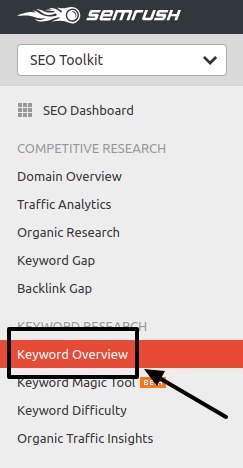
Step 2: On the left hand side navigation, click “Keyword Overview” and type the keyword/phrase you want to target in the search box provided at the top of the page
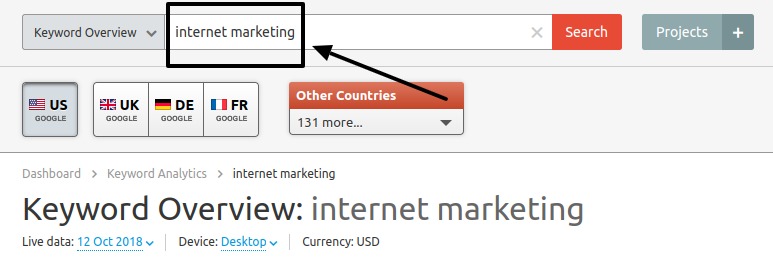
Step 3: You’ll be provided with a variety of graphs and lists of possible keywords that match the keyword phrase you typed in. Check the metrics of each suggested keyword to find the best option for your web page and you’re all set!
Now, when you’re deciding which keyword to optimize your page for, there are a few points you want to keep in mind:
- use low volume keywords
- use long-tail keywords
- use low competition keywords
- stay away from unique industry jargon
You want your web page keywords to be as specific as possible, while still remaining relevant to your target audience. Low-volume, long- tail keywords will ensure that you, as a small business, can remain competitive in SERP rankings by allowing your target audiences to find your pages. You want to make sure you’re using the keywords your target audience is actually using as well. Using more specific keywords will put your result in the path of those who are knowledgeable and active in your industry or market, and potentially ready to buy. Generalized keywords may make your pages more available to the general public, but they could get lost in the midst of bigger businesses trying to rank for that same keyword.
Once you get comfortable using the keyword research tools in whatever platform you prefer, don’t forget to invest in SEO competitive analysis too! Because you are competing with other businesses ranking for the same keyword as you, you need to make sure you have a strong keyword strategy in place.
In Conclusion
You can spend days (or years!) diving into SEO and keyword research. There are a lot of free resources you can lean on, but having an experienced perspective can help provide you with direction. Don’t get overwhelmed! Take the time to educate yourself and remember to follow best practices when implementing keywords, and measure the effectiveness of your implementation. Keyword optimization is a never ending task that requires constant work, but the results are well worth the effort!
 Blog
Blog Case Studies
 Infographics
 Free Comprehensive Analysis